

Key Takeaways
- Odometer rollback signs appear in paperwork, cabin wear, and service records.
- NHTSA estimates over 450,000 cars are sold yearly with false mileage readings.
- Worn pedals, glossy steering wheels, and faded seats expose false low miles.
- A decreasing mileage trail on a history report is near-proof of fraud.
- Digital odometers are easier to tamper with than old mechanical ones.
Last spring, I nearly bought an SUV that promised a miracle. The listing claimed one owner and just 52,000 miles, with a price sitting $5,000 below market value. I initially assumed the seller needed a fast sale, but I remembered the odometer-rollback warnings highlighted on Tradecarhub. Following their inspection advice, I opened the driver’s door and ran my thumb across the brake pedal. The rubber was worn smooth, almost glassy. Meanwhile, the steering wheel had a polished shine that only years of palms create.
A 52,000-mile car should not feel like that. I asked for service records, and one page settled everything. An oil change sticker from two years earlier listed the mileage at 138,000. The seller suddenly remembered another buyer who was coming later. I walked away, and the listing disappeared within a week.
That afternoon taught me to read cars, not listings. This guide covers the odometer rollback signs that exposed that SUV. You will learn where fraud hides, which clues never lie, and how to protect your money before you buy.
What Odometer Rollback Is and Why It Costs You
Odometer rollback means turning back the displayed mileage to make a car look younger. Scammers do it because mileage drives price. A car with 60,000 miles sells for thousands more than the same car at 160,000. Therefore, the fraud is tempting, easy, and profitable.
The scale is bigger than most buyers imagine. According to the NHTSA odometer fraud page, more than 450,000 vehicles are sold each year with false odometer readings. As a result, American consumers lose over $1 billion annually. The agency calls it one of the oldest and most costly vehicle crimes.
The costs reach beyond the overpayment. High-mileage cars need timing belts, transmissions, and suspension work that low-mileage cars do not. Therefore, a rolled-back odometer also hands you a schedule of surprise repairs. Additionally, a car with unknown true mileage loses resale value, because honest buyers will not pay for mystery.
Modern technology made the crime easier. Old mechanical odometers required physically rewinding dials, which left evidence. Today, cheap tools can rewrite digital displays in minutes. However, the fraud still leaves fingerprints everywhere else. The sections below show you exactly where to look.
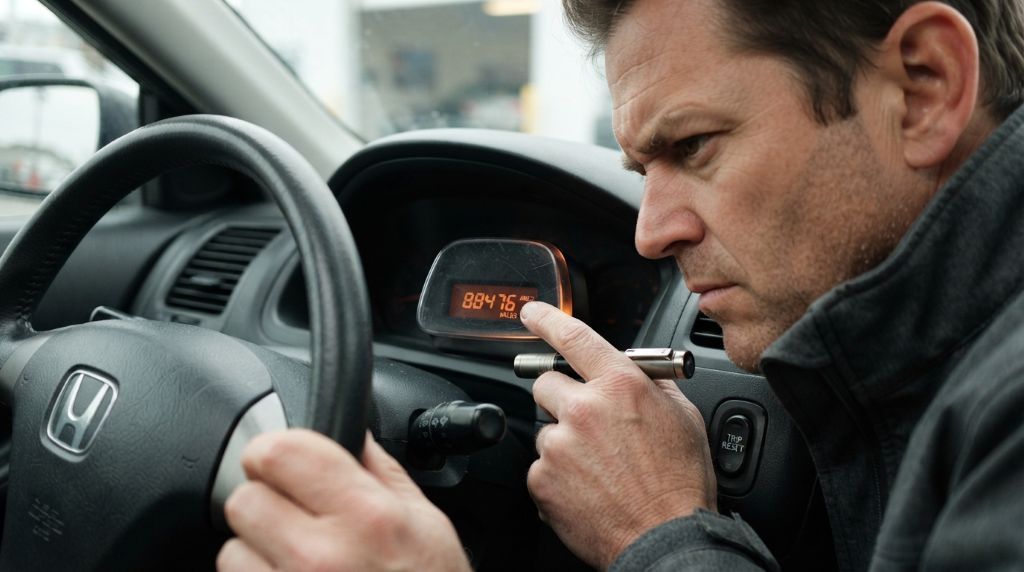
Start With the Paper Trail
Paperwork catches most rollback attempts, because fraud requires consistent lies across many documents. Start before you visit the car. Ask the seller for the VIN, then pull a history report from Carfax or AutoCheck. Additionally, run the free federal check at vehiclehistory.gov, the official NMVTIS database.
Then read the mileage trail carefully:
- History reports list odometer readings from inspections, services, and title events
- The numbers should climb steadily year after year
- Any decrease between dates is a major red flag
- Long gaps in records deserve questions, not assumptions
A single decreasing entry is close to proof of tampering. Additionally, compare the history report against the current dashboard. A report showing 140,000 miles on a car displaying 60,000 ends the conversation immediately.
Next, request service records and inspection stickers. Oil changes, state inspections, and emissions tests all record mileage. My SUV’s oil sticker betrayed the seller perfectly. Therefore, ask for maintenance invoices, and read every mileage line. Emissions records are especially useful, because many states store them in public databases for years.
Finally, check the title and registration history. Title transfers record mileage in most states, and federal law requires disclosure at sale. Compare every document’s number against the others. Consistency protects you. Inconsistency, even in one place, deserves a full explanation before you continue.
Read the Cabin: Where Wear Tells the Truth
Mechanical odometers can rewind, however, seats cannot lie. Interior wear follows real usage, therefore, the cabin is your lie detector. Work through these checkpoints on any low-mileage claim:
- The driver’s seat should feel firm, not flattened or ripped at the bolster
- Pedal rubber should carry texture, not a glassy, worn-smooth surface
- The steering wheel should not shine from years of hand oils
- Floor carpets should resist your fingernail, not wear thin instantly
- Buttons and switches should keep their printed labels
Match the wear to the claimed mileage logically. A 40,000-mile car should feel nearly new inside. Meanwhile, a 150,000-mile car shows a shine everywhere the driver touches. My SUV failed this test instantly, because pedals wear exactly one way, through use.
Check the smaller clues too. The driver’s armrest, the door handle, and the shifter all collect wear at predictable rates. Additionally, look at the sun visor, which absorbs years of sun on high-mileage cars. Plastic trim near the driver’s knee often rubs smooth over time.
One caution keeps you fair. Highway-driven cars wear slowly, because cruising is gentle. Therefore, an honest 100,000-mile interstate car can look fresh. However, the reverse is the real warning. A claimed 50,000-mile car with heavy wear is almost always lying, because light wear never appears early. Believe the wear before you believe the number.
Look Under the Hood and Under the Car
Engines and parts also keep mileage records, and they never take requests. Open the hood and inspect the obvious age markers first.
Check the belts and hoses. Rubber belts crack with age and miles, while fresh belts suggest either care or replacement before a sale. Therefore, ask when any recent work happened. Then check the battery date code on the label. A car claiming low miles with an eight-year-old battery deserves questions.
After that, look at these parts:
- Brake rotors, which thin with every mile driven
- Suspension bushings, which crack with age and use
- The exhaust tip, which darkens and roughens over years
- Tires, which carry a four-digit date code on the sidewall
The tire code works like a birthday. The first two digits mark the week, and the last two mark the year. Four fresh tires on a claimed low-mileage car may simply mean recent replacement. However, old, cracked tires matching a high-mileage story deserve suspicion when the dash says otherwise.
During the test drive, listen for age. Worn suspension clunks over bumps. Tired wheel bearings hum at speed. Additionally, a transmission that hesitates has lived a full life. One worn part means a repair. Several worn parts together mean the odometer is probably lying. Therefore, count the clues before you negotiate, and let a mechanic confirm the story with a lift inspection.
Digital Odometers and Modern Tampering
Many buyers assume digital displays are tamper-proof. Unfortunately, the opposite is often true. Old mechanical odometers left physical evidence when rewound, such as misaligned digits or screw marks. Modern digital clusters can be rewritten with small programming tools in minutes.
However, digital fraud still leaves trails. Start with the instrument cluster itself. Check whether the screws holding the cluster show fresh scratches, because removal is the first step in most tampering. Additionally, look at the dashboard trim around the cluster for pry marks. A cluster that was recently opened, without a matching repair invoice, is a serious warning.
Mileage also lives in more places than the display. Modern cars store odometer data in several modules, including keys and body computers on many models. A professional scanner can read these stored values. Therefore, a dealer or qualified mechanic can compare modules in minutes. Mismatched numbers between modules strongly indicate tampering.
Some tampering is even dumber than it sounds. Sellers sometimes replace a high-mileage cluster with a low-mileage one from a junkyard. The new display shows the donor car’s miles. However, the history report, service records, and module memories still hold the truth. Consequently, no single display should ever decide a purchase. Always demand matching evidence from at least two independent sources before you trust any number.
What to Do If You Suspect Rollback
Finding odometer rollback signs does not require a confrontation. Follow this sequence instead:
- Stop negotiations politely, without accusing anyone.
- Photograph the dashboard, pedals, tires, and any records you saw.
- Pull a complete history report, if you have not already.
- Compare every mileage record you can access.
- Walk away if the evidence conflicts, because another car always exists.
If you already bought the car, act fast. Federal law, under the Motor Vehicle Information and Cost Savings Act, allows victims to sue for damages. Many states add their own penalties, and attorneys general handle complaints. Therefore, report suspected fraud to your state DMV and to NHTSA through its fraud complaint system.
Prevention remains cheaper than justice. A $30 history report and a ten-minute cabin inspection would have saved my SUV seller’s next victim. Additionally, most rollback attempts fail against buyers who simply compare documents. The fraud requires total consistency across years of records, and scammers rarely achieve it.
Finally, trust the pattern, not any single clue. One worn pedal can be a driver’s habit. However, worn pedals, a shiny wheel, thin rotors, and gapped records together form a verdict. Therefore, count the clues, demand the paperwork, and never let a low number rush your decision.
Final Thoughts
Odometer fraud survives on speed and charm, and it dies under paperwork and patience. Check the mileage trail on history reports, read the cabin’s honest wear, and inspect the mechanical age markers. You can also use the right tools to verify a vehicle’s condition more carefully—see 10 Ingenious DIY Car Repair Tools for Specific Tasks That Save Time and Money. Then compare every source against the dashboard. Consistency means confidence. Conflict means walk away.
Remember the SUV with 52,000 promised miles. One thumb across a smooth pedal and one oil sticker ended the story in five minutes. The same clues wait on thousands of lots right now, so use them before you pay.
Have you ever caught an odometer rollback or discovered one too late? Share your story in the comments below. Additionally, share this guide with a friend shopping for a used car, because the cheapest protection is simply knowing where to look.
Frequently Asked Questions
What is odometer rollback?
It is the crime of turning back a car’s displayed mileage to raise its price. It is illegal under federal law.
How common is odometer fraud?
NHTSA estimates more than 450,000 vehicles are sold yearly with false readings, costing buyers over $1 billion.
Are digital odometers harder to tamper with?
No. Digital displays are often easier to rewrite. However, module data and records still expose the fraud.
What is the quickest rollback check?
Compare the history report’s mileage trail with the dashboard. Any decrease between dates signals tampering.
Can interior wear really reveal true mileage?
Yes. Pedals, steering wheels, and seats wear predictably. Heavy wear on a low-mileage claim is a strong warning.

