

Rust is the quiet enemy of every angler. You buy quality hooks, swivels, and lures, then watch them slowly turn orange in the box. However, as the tackle specialists at Crazyfishinggear.com/ often warn, corrosion is not inevitable. It needs three ingredients, which are metal, moisture, and time. Remove any one, and rust stops. Therefore, humid climates simply mean you fight harder on the moisture side of the equation. The good news is that prevention is cheap and takes minutes per trip. In this post, you will learn why tackle corrodes, how to build a moisture-proof storage system, and the habits that keep your gear fishable for years. Read on, because dry tackle catches fish, and rusty tackle catches nothing but regret.
Key Takeaways
- Corrosion needs metal, moisture, and time, so attack the moisture first.
- Rinse and fully dry all tackle after every trip, especially saltwater outings.
- Use silica gel packs and sealed boxes to control humidity inside storage.
- Store tackle indoors at room temperature, never in a damp garage or shed.
- Apply light protective coatings like reel oil or wax to hooks and blades.
- Inspect tackle monthly and replace deeply rusted items without hesitation.
Why Tackle Corrodes and What Humidity Does
Understanding corrosion turns prevention from guesswork into a system. Most fishing tackle is steel, brass, or plated metal. Steel contains iron, and iron plus oxygen plus water produces rust. Additionally, salt speeds the reaction dramatically by making water more conductive. Consequently, saltwater tackle corrodes many times faster than freshwater gear.
Humidity is the sneaky ingredient. You do not need rain or a dunk to wet your tackle. Humid air carries water vapor, and that vapor condenses on cool metal surfaces every night. Therefore, a tackle box in a humid garage collects moisture daily without ever seeing rain. Additionally, temperature swings make it worse. Warm humid air enters the box during the day, then cools at night and condenses. Consequently, a closed box in a humid room slowly bakes rust onto your hooks.
Different metals corrode at different speeds. Plain carbon steel hooks rust fastest. Stainless steel resists rust but costs more and dulls quicker. Additionally, plated finishes, like tin or nickel, slow corrosion only until the coating scratches. Therefore, even premium tackle eventually faces the same chemistry. Consequently, your habits matter more than your budget.
Corrosion also spreads between touching pieces. A rusty hook lying against clean swivels transfers moisture and electrolytes. Additionally, mixed metals in contact create galvanic corrosion, where one metal eats another. Therefore, a single wet lure can start a chain reaction in a tray. Consequently, separation and dryness protect the whole box, not just one item.
The damage goes beyond looks. A rusted hook loses its point and weakens at the bend. A corroded swivel seizes and twists your line. Additionally, rust on spinner blades ruins the flash that attracts fish. According to saltwater fishing guides and tackle manufacturers, degraded tackle fails under load and costs fish. Therefore, corrosion is a performance problem, not just a cosmetic one.
Finally, know your local enemy. Coastal anglers fight salt, while inland anglers fight summer humidity and boat bilge moisture. However, the prevention system below works for both, because it targets the same ingredient. Therefore, read on and build your defense once, for all conditions.
Build a Dry Storage System That Works
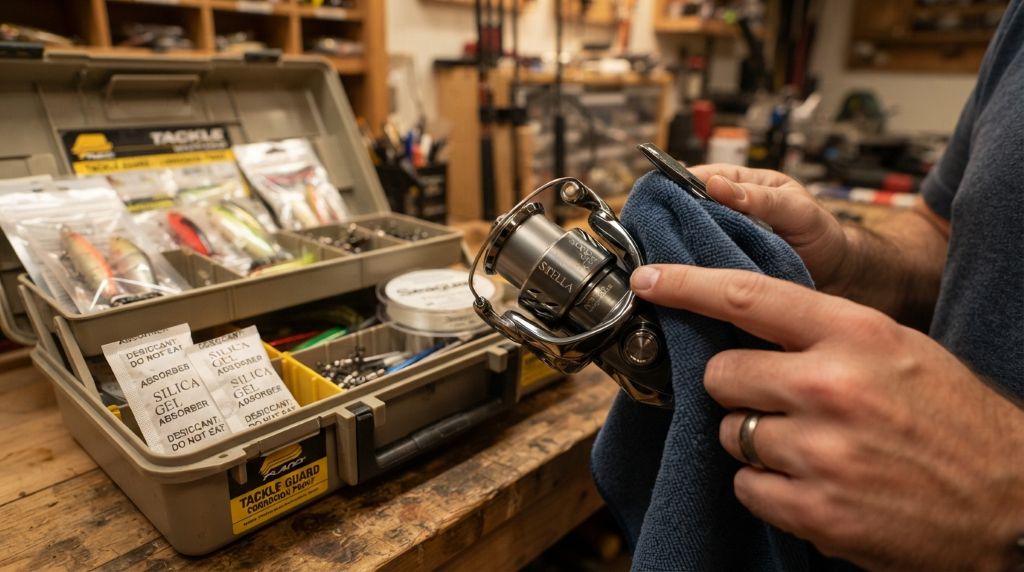
Your storage setup decides most of the battle. Therefore, build a system that keeps moisture out and controls what sneaks in. The good news is that the whole system costs less than a handful of lures.
- Choose sealable tackle boxes with rubber gaskets for long-term storage.
- Add silica gel packs or rechargeable dehumidifier packs to each box.
- Separate metals into trays by type so dissimilar metals never touch.
- Line tray bottoms with foam or plastic, never bare metal against metal.
- Store boxes indoors in a dry closet, never in a boat or damp shed.
- Keep the storage room itself ventilated or lightly dehumidified.
The gasket box rule matters most in humid climates. A standard snap-latch box breathes with every temperature change. However, a rubber gasket seal keeps humid air from cycling in and out. Additionally, gasket boxes protect against accidental splashes and boat spray. Consequently, one good box replaces three cheap ones over time.
Silica gel is the cheapest insurance in fishing. The little packs absorb water vapor inside sealed boxes. Additionally, rechargeable silica packs change color when full and renew in an oven or microwave. Therefore, buy several and rotate them. Put a pack in every tray that holds bare metal. Consequently, humidity never gets a foothold inside your system.
Metal separation is an underrated rule. Hooks, swivels, and lures in one pile create moisture pockets and galvanic pairs. However, divided trays keep air moving and metals apart. Additionally, use original packaging where possible, because manufacturers design it for storage. Therefore, a tidy box is a dry box, and a dry box is a rust-free box.
Boat storage deserves a special warning. Bilge areas and onboard compartments stay humid all season. According to marine maintenance experts, enclosed boat compartments hold moisture even in dry weather. Therefore, never store tackle on the boat between trips. Bring the boxes inside and leave the boat for rods and safety gear. Consequently, your tackle lives indoors and only visits the water.
Finally, add a hygrometer to your storage shelf if you want precision. Ideal storage sits below 50 percent relative humidity. Additionally, a small dehumidifier in a tackle room pays for itself in saved gear. Therefore, measure once, adjust once, and stop guessing about your air.
Rinse, Dry, and Protect After Every Trip
The cleaning routine after fishing is where corrosion wins or loses. Tackle comes home wet, salty, or humid, and what happens in the next hour decides its fate. Therefore, build this routine and never skip it.
- Rinse all tackle in fresh water after every trip, especially saltwater.
- Disassemble lures with hooks or trebles so water cannot hide in joints.
- Pat dry with a towel, then air dry fully before storage.
- Wipe hooks and blades with a lightly oiled cloth for a protective film.
- Inspect each item for rust spots, dull points, and seized swivels.
- Return only fully dry tackle to the sealed boxes.
The rinse step sounds basic, but technique matters. Use a gentle spray, never a pressure blast, because force pushes water into joints and bearings. Additionally, rinse lures with moving parts by hand and work the joints. Therefore, salt leaves the surface instead of hiding in the seams. Consequently, a two-minute rinse saves a ten-dollar lure.
Drying must be complete, not casual. A towel-dry surface still holds film moisture in hook eyes and swivel barrels. Therefore, lay tackle out on a towel in moving air for an hour or overnight. Additionally, a fan speeds the job on humid days. Consequently, only bone-dry gear enters your sealed boxes, which is the whole point of sealing them.
Protective coatings add the second layer of defense. A wipe with a cloth lightly dampened with reel oil leaves a thin film that blocks moisture from bare steel. However, use very little, because heavy oil attracts dirt and softens paint finishes. Additionally, a thin coat of paste wax protects lure bodies and blade finishes. Therefore, oil for hooks and swivels, wax for painted surfaces. Consequently, your tackle carries a raincoat even when the box is open.
Saltwater gear deserves the extended version of this routine. Rinse twice, once quickly at the ramp and once fully at home. Additionally, check hook eyes and line ties for white salt crusts, which signal missed spots. Therefore, treat every salt trip as a full maintenance event. Consequently, your premium saltwater tackle outlasts the anglers who skip it.
Finally, log the routine into your habits, not your memory. Hang a small towel and a spray bottle by your gear shelf. Additionally, keep a drying rack or a dedicated towel spot for tackle nights. Therefore, the routine happens automatically after every trip, even the tired ones. That consistency is the entire difference between gear that lasts one season and gear that lasts ten.
Monthly Inspection and Tackle Rescue Tips
Prevention is the plan, but inspection is the safety net. Therefore, once a month, open your boxes and look closely. Early rust spots wipe away. However, deep rust means replacement. Your inspection has three jobs, which are catch, rescue, and replace.
Start with the catch. Look for orange staining on hooks, white crust on swivels, and cloudy patches on blades. Additionally, check the foam and tray liners for dampness or stains, because they show leaks in your system. Therefore, a monthly ten-minute review catches problems while they are still cheap.
Next, rescue what you can. Light surface rust comes off with fine steel wool or a brass brush and a little oil. Additionally, soak seized swivels in a light penetrating oil overnight and work them free. However, test every rescued item under tension before trusting it. A weakened hook straightens under a good fish. Therefore, rescue is for cosmetics, and replacement is for safety.
Know the replacement rules. Replace any hook with deep pitting, a rust-weakened bend, or a dull point that will not sharpen. Additionally, replace swivels that stick after cleaning, because a seized swivel twists line into a broken leader. Consequently, spending two dollars on a hook is cheaper than losing the fish of the year.
Blades and painted lures have their own rescue path. Strip old finishes and repaint, or fish them dull, because some fish prefer muted blades. Additionally, replace rusted trebles on otherwise good lures, which is cheaper than buying new lures. Therefore, a parts stock of quality hooks and split rings turns corroded lures into fresh ones.
Finally, keep the long view. Tackle is a tool, and tools wear. However, gear that lives dry and gets inspected monthly wears at one tenth the speed of neglected gear. According to tackle manufacturers, well-maintained stainless and plated tackle lasts many seasons even in coastal climates. Consequently, your monthly ten minutes is the cheapest maintenance in all of fishing.
Conclusion
Corrosion needs metal, moisture, and time. You cannot remove the metal, but you can control the moisture and the time. A sealed storage system, silica packs, and indoor shelving keep humidity out. Additionally, a rinse-and-dry routine after every trip plus monthly inspections stop rust while it is still cosmetic. Keeping all your gear in good condition, from storage equipment to the setup explained in how to catch more fish with the right landing net setup, can make each fishing trip easier and more productive.
Therefore, start tonight. Buy a gasket box and silica packs, then move your tackle off the boat and out of the garage. Then set up your rinse towel and drying spot by the door. Dry tackle fishes better and lasts for years, so build your system this week and never fight rust again.
FAQs
How do I stop fishing hooks from rusting?
Rinse and fully dry hooks after every trip, then store them in a sealed box with silica gel packs. Additionally, a light oil wipe adds a protective film. Consequently, moisture never stays long enough to start rust.
Is it safe to fish with rusty hooks?
Lightly rusted hooks can be cleaned and sharpened. However, deep pitting or a weakened bend means replacement. Therefore, inspect each hook under load and be honest about damage.
Do silica gel packs really prevent tackle rust?
Yes, inside sealed boxes. Silica absorbs the humidity that would otherwise condense on metal overnight. However, packs saturate over time. Therefore, recharge or replace them each season.
Where is the best place to store tackle in a humid climate?
A dry indoor closet or shelf at room temperature works best. Never store tackle in a boat, damp garage, or shed. Additionally, keep the storage room below 50 percent humidity where possible.
How often should I clean my fishing tackle?
Clean after every trip with a quick rinse and full dry. However, do a deeper cleaning monthly with inspection. Consequently, corrosion never gets the head start it needs.


