
You walk into the gym, scan the rack of dumbbells, and realize every pair you need is taken. Your workout is already slipping away. Sound familiar? This is where resistance bands for gym become your secret weapon. They are lightweight, incredibly versatile, and can replace or complement heavy free weights when equipment is scarce. The problem is that most people grab a band and only do bicep curls. You are missing out on a full-body transformation. In this guide, you will learn exactly how to use bands to build muscle, improve mobility, and break through plateaus. Whether you are a beginner or a seasoned lifter, these tools will change how you train.
What Are Resistance Bands for Gym and Why Should You Use Them?
Defining the Tool
Resistance bands for gym are elastic bands that provide variable resistance. Unlike free weights where gravity determines the load, bands create tension throughout the entire range of motion. This means the muscle works harder at the top of the movement, which is a weakness of traditional weights.
The Real Benefits of Band Training
Bands are not just a travel substitute. They offer unique advantages in a commercial gym setting. First, they reduce joint stress because you control the acceleration. Second, they are ideal for warm-ups to activate dormant muscles. Third, you can use them for accommodating resistance—adding bands to a barbell to overload the lockout phase of a lift. This is how powerlifters push past sticking points.
Addressing a Common Misconception
Many believe bands are “easy.” In reality, a heavy loop band can provide over 100 pounds of tension at full stretch. You can absolutely build muscle and strength with them, especially for lateral raises, glute bridges, and pull-ups.
How Do You Choose the Right Resistance Bands for Your Gym Workout?
Understanding Resistance Levels
Bands are typically color-coded by tension. Light bands (5–15 lbs) are for rehabilitation and mobility. Medium bands (15–35 lbs) work for upper body isolation and glute activation. Heavy bands (35–70 lbs) are for squats, hip thrusts, and lat pulldowns. Extra-heavy bands (70+ lbs) are for advanced accommodating resistance on barbells.
Which Type of Band Do You Need?
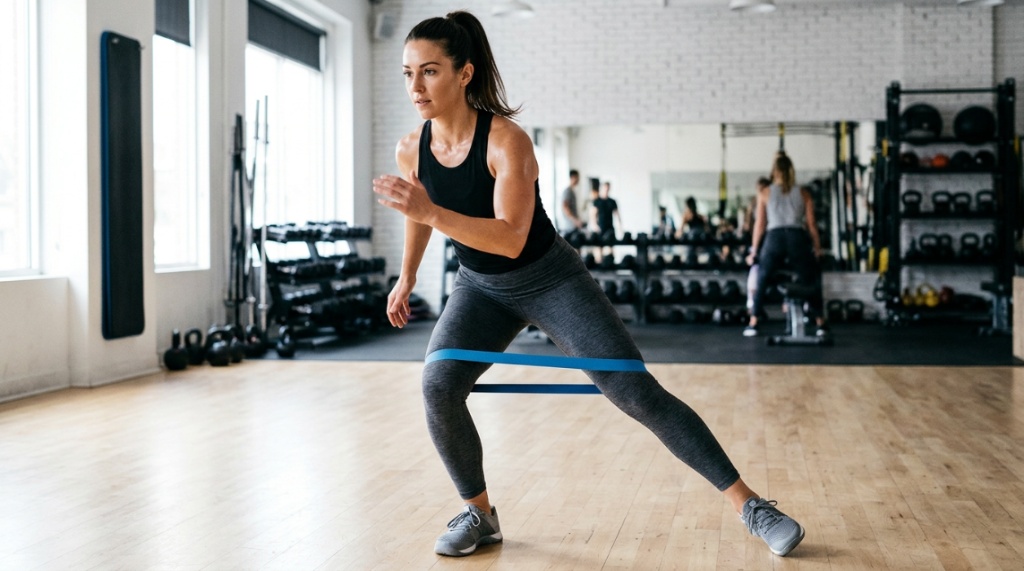
There are three main types: loop bands (flat, continuous loops perfect for legs and glutes), tube bands with handles (great for cable-style pulls and rows), and mini bands (small loops for ankle work and lateral walks). If you only buy one type, start with a set of long loop bands. They offer the most versatility for the gym floor.
Cost vs. Quality Considerations
Cheap bands snap and lose elasticity quickly. Invest in layered latex bands. They cost more but last years. For a cost-effective option that holds up to heavy gym use, consider checking out high-quality options like those listed for resistance bands for gym setups.
How Do You Use Resistance Bands for a Full Upper Body Workout?
Pressing Movements with Bands
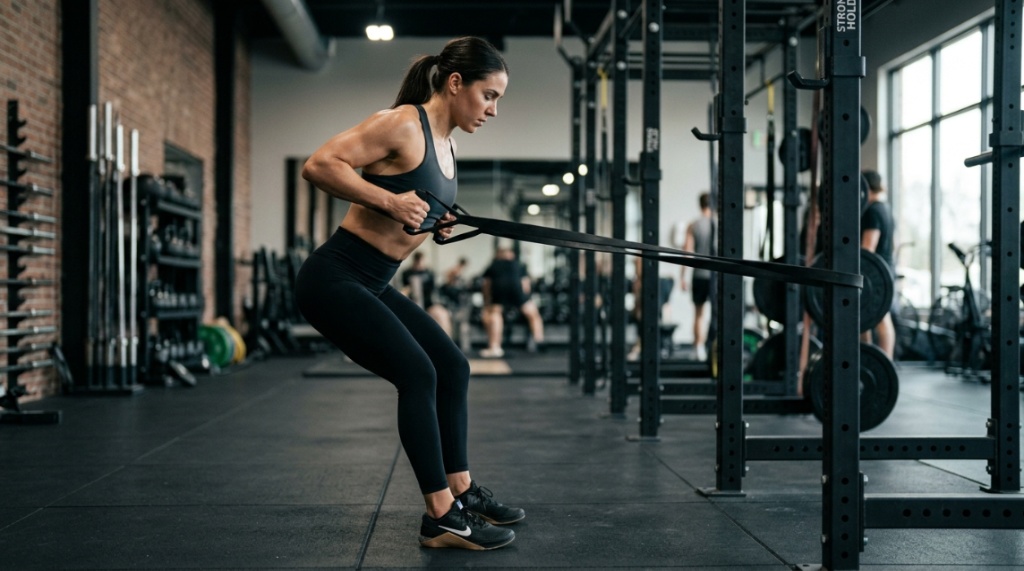
Loop the band around a power rack post at chest height. Grab the ends and push forward for a standing chest press. This mimics a cable fly and forces your core to stabilize. For overhead pressing, stand on the center of the band and press the handles overhead. The hardest part is the lockout, which builds shoulder stability.
Pulling Movements for Back and Biceps
Loop the band around a high pull-up bar. Kneel on the floor and pull the band down to your chest for a lat pulldown. For rows, secure the band under your feet and pull toward your belly button. Keep your elbows tight to hit the lats. Bicep curls with bands are effective, but slow the tempo down to increase time under tension.
Pros and Cons of Banded Upper Body Work
| Pros | Cons |
|---|---|
| Constant tension on the target muscle | Harder to gauge exact weight load |
| Zero joint impact on elbows and shoulders | Requires anchoring points (rack, door, etc.) |
| Excellent for warm-ups and blood flow | Resistance increases with stretch (can be fatiguing) |
What Is the Best Way to Use Resistance Bands for Legs and Glutes?
Glute Activation Before Squats
Place a mini band just above your knees. Perform a banded glute bridge: lie on your back, knees bent, push through your heels. Focus on driving your knees outward against the band. Do 20 reps before squatting. This wakes up the glutes and prevents quad-dominant squatting.
Squats and Lunges with Loop Bands
Stand on a long loop band with feet shoulder-width apart. Hold the band at your shoulders. Squat as normal. The band pulls you forward, forcing you to keep your chest up and core tight. For lunges, step one foot back and hold the band at the front shoulder. The resistance challenges your balance.
Hip Thrusts for Maximum Glute Growth
Place a heavy band over your hips and anchor the ends under a barbell or bench. Perform a hip thrust. The band creates peak tension at the top of the movement, which is exactly where the glutes contract hardest. This is a proven method for building the glute bridge movement.
How Can You Incorporate Bands into Your Existing Gym Routine?
Using Bands as a Warm-Up Tool
Before your main lifts, perform a banded routine. For example, before bench press, do band pull-aparts (hold a band in front of you and pull it apart with straight arms). This activates the rear delts and external rotators, reducing injury risk. For lower body, do banded lateral walks to activate the glute medius.
Adding Bands to Barbell Exercises (Accommodating Resistance)
Hook a band onto the bottom of the barbell and loop it under the rack. As you lift, the band stretches, adding more weight at the top. For squats, this forces you to drive through the lockout. For deadlifts, it strengthens the top third of the pull. Add 10-15% of the band tension to your bar weight.
When to Use Bands Versus Cables
Use bands when you want variable resistance that increases at lockout. Use cables when you need a constant load throughout the range of motion. Bands are better for explosive movements. Cables are better for slow, controlled isolation. Both have a place in a single workout.
Can You Build Muscle Effectively with Only Resistance Bands at the Gym?
The Science of Muscle Growth with Bands
Yes. Muscle growth requires mechanical tension, metabolic stress, and muscle damage. Bands provide all three. The key is proximity to failure. If you take a banded set to within 1-2 reps of failure, you will stimulate hypertrophy. The variable resistance also recruits more motor units because the muscles must stabilize the dynamic load,While resistance bands are fantastic for compound movements and building overall muscle endurance, you can also target stubborn muscle groups by pairing them with specialized routines. To round out your upper body development and fix imbalances, be sure to Unlock Your Strength with These Top Rear Delt Exercises to complement your band training regimen.
Progressive Overload with Bands
To keep growing, you must increase tension over time. With bands, you can: move to a thicker band, stack two bands together, increase the number of reps, or decrease rest time. Track your workouts just like you would with weights. If you did 15 reps with a medium band last week, aim for 17 reps this week.
Limitations to Consider
Bands are less effective for heavy compound lifts like maximum deadlifts where loading the eccentric is crucial. They are also harder to micro-load incrementally. Use bands as a primary tool for accessories and a secondary tool for main lifts.
What Common Mistakes Do People Make When Using Resistance Bands?
Not Checking for Wear and Tear
Bands can snap if they have micro-tears. Check your bands before each use. Hold them up to the light. If you see any fraying or small nicks, replace them immediately. A snapping band can hit you in the face or cause a painful bruise.
Using the Wrong Anchor Points
Do not hook bands onto sharp edges or small hooks. Always use a band anchor or a smooth post. If you wrap a band around a metal rack with sharp edges, it will cut the latex. Use a carabiner or a dedicated band peg for safety.
Doing Reps Too Fast
Bands require controlled tempos. If you snap through the motion, you lose tension at the stretch point. Slow down the eccentric (lowering phase) to 3 seconds. This maximizes time under tension and keeps the muscle loaded.
How Do You Maintain Resistance Bands for Longevity?
Cleaning and Storage
Wipe bands down with a damp cloth after use to remove chalk and sweat. Do not use harsh chemicals. Store them out of direct sunlight. UV rays break down latex quickly. Keep them in a cool, dark bag. Do not leave them in a hot car.
When to Retire a Band
A band loses its elasticity over time. If the band feels “soft” or stretches much further than it used to with less tension, it is time to replace it. Rubber bands have a lifespan of 6–12 months with heavy gym use.
Frequently Asked Questions
Can you use resistance bands every day?
Yes, for mobility and light activation work, daily use is safe. For strength training, treat bands like weights and give muscles 48 hours of recovery between intense sessions.
Do resistance bands actually build muscle?
Yes. Research shows that resistance bands can produce hypertrophy equal to traditional weights when using high tension and training to failure. They are effective for muscle growth.
How do you know what band size to buy?
Buy a set. Most brands sell packs with light, medium, and heavy bands. Start with the medium band for upper body and the heavy band for lower body. Adjust based on how many reps you can complete with good form.
Can you use resistance bands for pull-ups?
Absolutely. Loop a band around the pull-up bar and put your knee or foot in the loop. The band assists you by reducing your body weight. This is the best way to progress from zero pull-ups to your first unassisted rep.
Are tube bands or loop bands better for the gym?
Loop bands are better for the gym because they are more versatile. They can be used for warm-ups, compound lifts, and accommodating resistance. Tube bands with handles are better for mimicking cable exercises at home.
What prevents bands from snapping?
Inspect them before use, avoid sharp edges, and do not stretch them beyond 3x their resting length. High-quality layered latex bands are less likely to snap than cheap rubber ones.
Can you bring resistance bands to a commercial gym?
Yes, most commercial gyms allow personal bands. Just be respectful of the equipment and do not attach bands to pull-up bars or racks in ways that damage the finish. Use dedicated band pegs when available.
Conclusion
Resistance bands for the gym are not just a cheap alternative to dumbbells. They are a legitimate training tool for muscle growth, joint health, and breaking strength plateaus. You now know how to choose the right bands, how to integrate them into warm-ups and main lifts, and how to avoid common mistakes that lead to injury or wasted effort. Stop waiting for the squat rack to free up. Grab your bands, loop them onto the power rack, and start your set immediately. Your muscles do not know if the tension comes from iron or latex—they only know if you are working hard enough. Start using bands tomorrow morning, and watch your weak points become strengths.


