

The first time I used an affordable surf poncho, I couldn’t believe I’d spent years doing the awkward towel dance behind car doors. Forty dollars solved a problem I’d lived with my entire beach-going life. But here’s what nobody tells you: not all affordable surf ponchos are created equal, and the cheapest ones often fail in ways that make you wish you’d spent ten dollars more. The best affordable surf poncho balances coverage, absorbency, durability, and quick-drying performance — all at a price that doesn’t make you wince. A quality beach changing poncho should cost $30–$60, provide full changing privacy, dry you effectively, and survive multiple seasons of sand, salt, and sun without falling apart at the seams.
Surf ponchos have exploded in popularity beyond just surfers — swimmers, parents, festival-goers, and anyone who changes in public spaces has discovered their value. This demand has flooded the market with options ranging from $15 thin towels to $80 premium designs, making it harder to identify genuine value. The good news: the best affordable surf ponchos in the $30–$60 range deliver 90% of what premium options offer at half the price. This guide breaks down exactly what to look for, what to avoid, and how to choose an affordable surf poncho that performs well without overpaying for features you don’t need.
What Makes a Surf Poncho Worth Buying?
A worthwhile surf poncho provides full-coverage privacy (falls below the knees), absorbs water effectively, dries reasonably fast, and uses durable stitching that survives repeated use — all in a comfortable, easy-to-wear design.
The core qualities that matter:
- Coverage: Must fall below your knees and have enough width to change underneath comfortably. Inadequate coverage defeats the entire purpose.
- Absorbency: Should dry you off as you change. Terry towelling absorbs best; microfiber dries faster but absorbs less.
- Quick-drying: The poncho itself should dry between sessions so it’s not damp and smelly. Microfiber excels here.
- Durability: Reinforced stitching at the neck and seams. Cheap ponchos unravel after a few uses.
- Comfort: Soft against skin, non-scratchy, with a comfortable hood and neck opening.
- Easy maintenance: Machine washable and resistant to odor buildup.
What Should an Affordable Surf Poncho Cost?
A quality affordable surf poncho costs $30–$60. Below $25, you typically get thin material, poor stitching, and inadequate coverage. Above $60, you’re paying for brand names or premium features that don’t significantly improve basic beach-day function.
Price tier breakdown:
| Price Range | What You Get | Verdict |
|---|---|---|
| $15–$25 | Thin material, basic coverage, weak seams | Often false economy — fails fast |
| $30–$45 | Quality terry or microfiber, good coverage, solid stitching | Best value sweet spot |
| $45–$60 | Premium materials, thicker towelling, better hood, pockets | Worth it for frequent users |
| $60–$100+ | Brand names, designer prints, marginal feature upgrades | Diminishing returns for casual use |
The sweet spot for most beachgoers is $30–$45. At this price, you get genuine quality — proper coverage, effective absorbency, and durable construction — without paying a premium for brand prestige or features that don’t impact basic performance.
Terry Cloth or Microfiber: Which Is Better for a Surf Poncho?
Terry cloth absorbs more water and provides more warmth, making it better for drying off and cooler conditions. Microfiber dries faster and packs smaller, making it better for travel and warm climates. Choose based on your priority.
Material comparison:
- Terry cloth (cotton towelling):
- Pros: Maximum absorbency, warmth, soft feel, dries you thoroughly
- Cons: Heavier, slower to dry itself, bulkier to pack
- Best for: Cooler conditions, drying performance, comfort priority
- Microfiber:
- Pros: Quick-drying, lightweight, packs small, less odor retention
- Cons: Less absorbent, less warm, can feel less plush
- Best for: Travel, warm climates, quick-dry priority, minimalist packing
- Waffle weave:
- Pros: Good balance of absorbency and quick-drying, lightweight
- Cons: Less warm than terry, less absorbent than full terry
- Best for: Versatile all-around use, mild climates
For most beach days, terry cloth is the better choice — the superior absorbency and warmth matter more than packability for typical use. Choose microfiber only if travel packing space or quick-drying is your top priority.
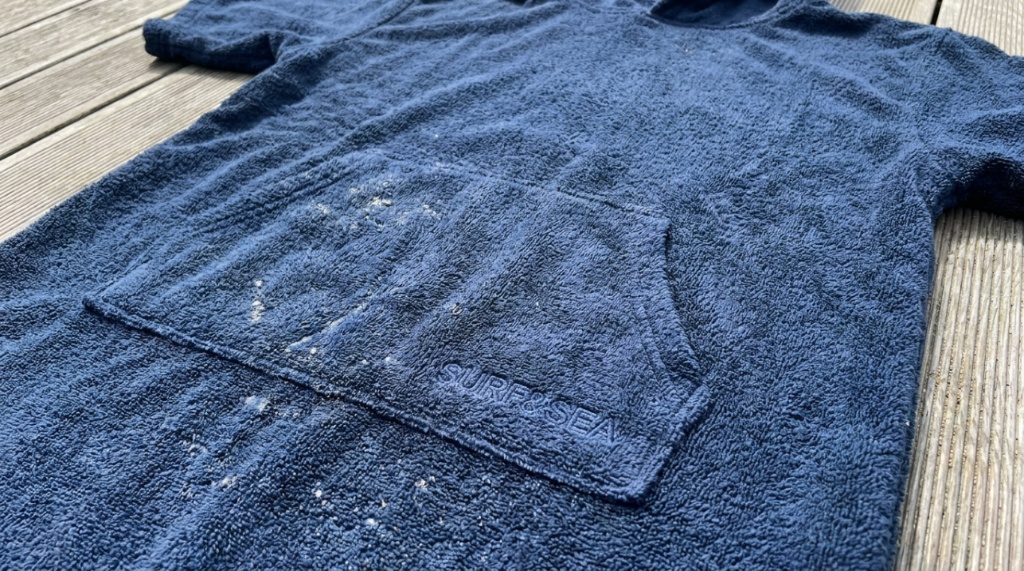
What Features Should You Prioritize in an Affordable Surf Poncho?
Prioritize adequate length, a comfortable lined hood, a front pocket, and quality stitching. Skip premium extras like waterproof shells or designer prints that inflate price without improving basic beach-day function.
Features ranked by importance:
- Adequate length (essential): Must fall below knees. Non-negotiable for privacy.
- Quality stitching (essential): Reinforced neck and seams. The #1 durability factor.
- Comfortable hood (important): Lined hood adds warmth and dries hair. Improves the experience significantly.
- Front pocket (nice to have): Kangaroo pocket warms hands and holds keys/phone. Convenient but not critical.
- Wide neck opening (important): Easy on/off over your head. A too-tight opening is frustrating daily.
- Absorbent interior (important): Towelling interior dries you while changing.
Features that inflate price without much benefit for casual users: waterproof outer shells (only needed for cold-water surfing), designer prints (purely aesthetic), brand-name logos (prestige, not function), and elaborate fastening systems (rarely necessary).
How Do You Spot a Low-Quality Surf Poncho Before Buying?
Watch for thin see-through material, single-stitched seams, inadequate length, scratchy fabric, and suspiciously low prices under $20 — these signal a poncho that will fail or disappoint within a few uses.
Red flags to avoid:
- Thin, see-through material: Won’t absorb well or provide adequate privacy. A quality poncho has substantial, opaque fabric.
- Single-line stitching at seams: Will unravel quickly. Look for reinforced or double stitching, especially at the neck.
- Too short: If it doesn’t reach below the knees, it fails at privacy. Check dimensions before buying.
- Scratchy or stiff fabric: Indicates low-quality materials. Quality towelling is soft against skin.
- Tiny neck opening: Difficult to get on and off. Test or check reviews for fit complaints.
- Prices under $20: Usually false economy. The savings disappear when it fails and you rebuy.
- No washing instructions: Signals a manufacturer cutting corners on basic product information.

What Are the Best Affordable Surf Poncho Options?
Quality affordable surf ponchos in the $30–$50 range from brands like Slowtide, Sun Cube, Robesea, and various surf shop house brands offer excellent coverage, absorbency, and durability without premium pricing.
What to look for in good affordable options:
- Terry cloth ponchos ($35–$50): Thick cotton towelling, full coverage, lined hood. Best for drying performance and warmth. Ideal all-around beach poncho.
- Microfiber ponchos ($30–$45): Quick-drying, packable, lightweight. Best for travel and warm climates.
- Kids’ surf ponchos ($25–$40): Smaller sizing, fun prints, durable for active children. Great value in multipacks.
- Surf shop house brands ($30–$45): Often manufactured to the same standards as name brands at lower prices. Good value.
When shopping, prioritize verified reviews mentioning durability after multiple washes, adequate coverage for taller users, and absorbency performance. These real-world reports reveal quality better than marketing claims.
How Do You Make an Affordable Surf Poncho Last Longer?
Rinse sand and salt before washing, machine wash on cold, air dry instead of machine drying, and avoid fabric softener — these habits double or triple the lifespan of an affordable surf poncho.
Care practices that extend lifespan:
- Shake out sand first: Sand grinds against fabric fibers in the wash, accelerating wear. Shake thoroughly before washing.
- Rinse salt water: Salt crystals are abrasive and degrade fabric. Rinse with fresh water after beach use.
- Cold machine wash: Hot water breaks down fibers and elastic faster. Cold preserves the material.
- Air dry: Machine drying heat damages towelling and reduces absorbency. Hang to dry.
- Skip fabric softener: It coats absorbent fibers, reducing their drying ability. Wash with mild detergent only.
- Store fully dry: Damp storage breeds mildew and odor. Ensure complete drying before storing.
With proper care, a $40 surf poncho lasts 3–5 years of regular use. Neglected (machine dried, stored damp, never rinsed), the same poncho might last only one season — making care habits more impactful than initial price.
Conclusion
Choosing the best affordable surf poncho means finding the sweet spot between price and performance — typically $30–$50 for a quality terry or microfiber poncho with adequate coverage, effective absorbency, and durable stitching. The cheapest options under $20 are usually false economy that fail fast, while premium $80+ ponchos charge for brand prestige and features most beachgoers don’t need. The middle ground delivers genuine quality at a price that makes sense.
Prioritize coverage and stitching quality above all else, choose terry cloth for drying performance or microfiber for packability, and avoid the red flags of thin material and weak seams. Then care for your poncho properly — rinse, cold wash, air dry — and it’ll serve you for years of beach days. The right affordable surf poncho transforms the worst part of any beach trip into a non-event, and it does so without straining your budget.
What’s your main beach activity and climate? Share in the comments — I’ll recommend the specific type of affordable surf poncho (terry vs. microfiber, with or without sleeves) that fits your needs best.
Choosing the right gear ensures you stay warm and comfortable after hours in the water. Just as finding a stable Sit-on-Top Kayak for Big Anglers Safely changes the game for a long day of paddling and fishing, a quality changing robe transforms your post-swim routine. Transitioning from the surf back to your vehicle becomes effortless when you have a dedicated space to dry off quickly on the shoreline.
Frequently Asked Questions
How much should I spend on a surf poncho?
Spend $30–$50 for a quality affordable surf poncho. This range offers proper coverage, effective absorbency, and durable stitching. Below $25, expect thin material and weak seams that fail quickly. Above $60, you’re mostly paying for brand names rather than better basic function.
Are cheap surf ponchos worth it?
Surf ponchos under $20 are usually false economy — thin material, poor stitching, and inadequate coverage lead to quick failure and rebuying. A $30–$45 poncho costs slightly more but lasts years, making it the better value. Don’t go too cheap on the one item you’ll use every beach session.
What size surf poncho should I get?
Choose a poncho that falls below your knees with enough width to move your arms while changing underneath. Most are one-size-fits-most with generous dimensions. Taller users (over 6 feet) should check length specifications carefully — some ponchos are too short for adequate privacy.
Is terry cloth or microfiber better for a surf poncho?
Terry cloth absorbs more water and provides more warmth — better for drying off and cooler conditions. Microfiber dries faster and packs smaller — better for travel and warm climates. For most beach days, terry cloth is the better all-around choice due to superior absorbency.
Can adults use kids’ surf ponchos?
No — kids’ surf ponchos are sized smaller and won’t provide adequate coverage or changing room for adults. Adults need full-size ponchos that fall below the knees. Buy age-appropriate sizing; an undersized poncho fails at its primary purpose of privacy.
How do I wash a surf poncho?
Shake out sand, rinse off salt water, then machine wash on cold with mild detergent. Air dry rather than machine drying — heat damages towelling and reduces absorbency. Skip fabric softener, which coats fibers and reduces drying ability. Store fully dry to prevent mildew.
Do surf ponchos work for swimming and other activities?
Yes — surf ponchos work for any activity requiring public changing or drying off: swimming, open-water sports, festivals, camping, and even as a beach cover-up. Their versatility makes them valuable beyond surfing. Parents especially appreciate them for changing kids out of wet swimwear.


