

Key Takeaways
- Car maintenance protects both safety and long-term ownership costs.
- A clear schedule prevents small issues from turning into expensive repairs.
- Essential services vary by mileage, not just by calendar year.
- Understanding typical costs helps you budget realistically for upkeep.
- Consistent care improves resale value and daily reliability.
Owning a car means accepting ongoing responsibility beyond the initial purchase. Car maintenance isn’t optional busywork; it’s the difference between a dependable vehicle and a constant headache. According to AAA, average annual maintenance costs run around $550 per vehicle. As automotive market analysts at vehicletradeus.com/ warn, skipping that spending doesn’t save money—it usually multiplies the bill later.
This guide breaks maintenance into a clear schedule, realistic costs, and essential services worth prioritizing. A friend of mine once delayed a coolant flush to save a few dollars. Six months later, an overheated engine cost her nearly $3,000 in repairs. That story shapes how I explain maintenance to anyone who asks.
Why Car Maintenance Matters More Than Most Drivers Think
Cars contain hundreds of moving parts working under constant stress. Heat, friction, and vibration wear these parts down gradually, whether you notice or not. Ignoring that reality doesn’t stop the wear; it just delays the consequences.
Financial stakes make this especially serious. AAA research found that roughly one in three U.S. drivers skip or delay recommended repair services. Many assume a running car means a healthy car. However, engines and transmissions fail gradually, often without obvious warning signs until it’s too late.
The safety angle deserves equal attention. Vehicle neglect contributes to a measurable share of crashes, according to transportation safety researchers, separate from driver error. Worn brakes, bald tires, and faulty lights directly affect your ability to stop and be seen. That’s not a minor detail; it’s a matter of life and death.
There’s also a resale value argument worth considering. Buyers consistently pay more for vehicles with documented service histories. A logged maintenance record proves a car received consistent care, not neglect disguised by a clean exterior. Therefore, every service you complete now pays dividends later, both in safety and resale value.
I’ve maintained every vehicle I’ve owned using a strict schedule, and none has needed a major unexpected repair. That’s not luck; it’s the direct result of catching small problems before they escalate into expensive ones.
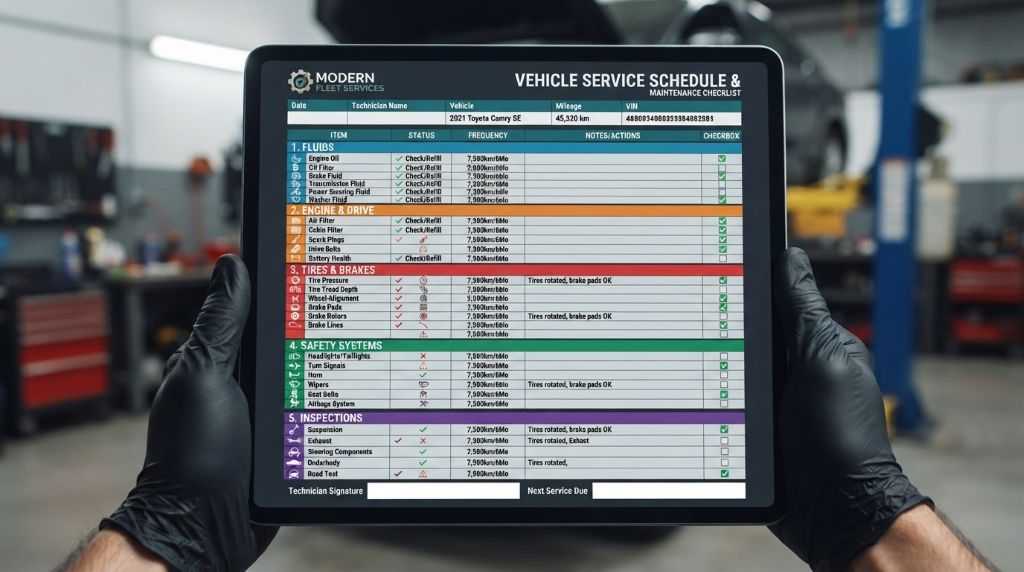
Building a Realistic Car Maintenance Schedule
A maintenance schedule works best when organized around both time and mileage. Some services depend on calendar months; others depend entirely on how far you’ve driven.
Monthly checks take minutes but catch problems early:
- Tire pressure and tread depth across all four tires.
- Engine oil level and color.
- Windshield washer fluid and wiper blade condition.
- All exterior lights, including brake and turn signals.
Mileage-based services follow a different rhythm entirely. Oil changes typically fall every 5,000 to 7,500 miles, depending on your owner’s manual. Brake inspections usually happen around 20,000 to 30,000 miles, while timing belts often need replacement between 60,000 and 90,000 miles.
Annual services add a professional layer beyond routine self-checks. Battery testing, wheel alignment, and suspension inspection all belong in a yearly review. A mechanic’s trained eye catches issues that casual inspection simply misses.
Combining these three layers creates a complete system. Monthly checks catch immediate problems. Mileage-based service protects major components. Annual inspections add expert verification. Skipping any single layer weakens the whole system, leaving gaps where expensive failures can develop unnoticed.
Understanding Real Maintenance Costs
Budgeting for car maintenance becomes easier once you understand typical cost ranges. AAA’s data placing average annual costs near $550 offers a useful baseline, though individual costs vary by vehicle age and type.
Routine services carry predictable price ranges:
- Oil changes: $35 to $75, depending on conventional versus synthetic oil.
- Brake pad replacement: $150 to $300 per axle.
- Tire rotation: $20 to $50, often bundled with oil changes.
- Battery replacement: $100 to $250, depending on vehicle type.
Larger services cost significantly more but happen far less frequently. Timing belt replacement often runs between $500 and $900, depending on labor complexity. Transmission fluid changes typically cost $150 to $250, a fraction of a full transmission rebuild.
Unexpected repairs hit hardest financially. Research shows the average unexpected vehicle repair bill lands between $500 and $600. Concerningly, roughly one in three drivers can’t afford that cost without financial strain. That statistic highlights why preventive maintenance matters more than reactive repair.
Setting aside a small monthly amount specifically for car maintenance prevents financial panic later. Even $50 monthly builds a meaningful buffer within a year. This approach turns unpredictable expenses into manageable, planned spending.
Essential Services Every Owner Should Prioritize
Not every maintenance task carries equal weight. Some services protect safety directly, while others primarily affect comfort or efficiency.
Brake system care ranks among the highest priorities. Worn pads or low fluid directly compromise stopping distance, especially in emergencies. Regular inspection catches wear before it becomes dangerous or damages rotors further.
Tire maintenance deserves similar urgency. Proper inflation and tread depth affect handling, fuel economy, and braking performance simultaneously. A tire losing pressure gradually often signals a slow puncture worth catching early.
Fluid checks protect major systems from silent damage. Low coolant risks overheating, while old transmission fluid accelerates internal wear. These checks take minutes but prevent some of the most expensive repairs a car can face.
Battery health matters more than most drivers realize until it fails suddenly. Testing voltage annually prevents the frustration of an unexpected no-start situation. Cold weather especially exposes weak batteries, often at the worst possible moment.
Prioritizing these four categories protects both safety and budget simultaneously. Everything else, including cosmetic detailing or minor comfort features, can wait when time or money runs short.
Final Thoughts
Car maintenance isn’t about perfection; it’s about consistency and awareness. A clear schedule, realistic cost expectations, and prioritized essential services together create a system that actually works. Skipping steps doesn’t save money long-term; it only delays and inflates the eventual bill. Regular checks can also help you catch warning signs early, especially when buying a used vehicle, so learning how to spot an odometer rollback can help you identify hidden mileage issues before they lead to unexpected maintenance costs.
My friend’s overheated engine remains a lesson I share often, because prevention always costs less than repair. Building small habits today protects both your safety and your wallet for years ahead. Start with one overdue service this week, and build from there.
Share this guide with someone who needs a maintenance refresher, or leave a comment about a repair you wish you’d prevented. Real experiences help other drivers avoid the same costly mistakes.
Frequently Asked Questions
How much should I budget annually for car maintenance?
Plan for roughly $550 per year, though costs vary by vehicle age and type.
What happens if I consistently skip oil changes?
Skipping oil changes accelerates engine wear and risks costly long-term engine damage.
Are mileage-based or time-based schedules more accurate?
Mileage-based schedules better reflect actual wear, especially for brakes, belts, and fluids.
Can basic maintenance really prevent major repairs?
Yes, catching small issues early consistently prevents them from becoming expensive failures.
Does maintenance history affect resale value?
Yes, documented service records build buyer trust and typically increase resale price.


