

California’s backcountry offers some of the most spectacular terrain in the country, from the granite peaks of the Sierra Nevada to the rugged coastline trails of Big Sur. But the same features that make these landscapes breathtaking—remote wilderness, extreme elevation changes, and unpredictable weather—also create serious risks for hikers who head out unprepared. Every year, search-and-rescue teams respond to calls involving dehydration, hypothermia, falls, and navigational errors that could have been prevented with proper planning. Before you lace up your boots, you need a solid strategy for route selection, gear, permits, and emergency protocols. This view guide walks you through what you actually need to do before hitting the trail, so you can enjoy California’s wild places and return safely.
Quick Answer
To plan a safe hiking trip in California’s backcountry, start by choosing a route that matches your fitness level and experience, then check current trail conditions and weather forecasts. Secure any required permits before you go, pack the ten essentials plus extra water and sun protection, and share your itinerary with someone reliable. Always carry a physical map and compass (not just your phone), and know how to use them. Finally, build in a turn-around time—a specific hour when you will head back regardless of how far you’ve come—to avoid hiking in the dark or during afternoon thunderstorms.
Key Takeaways
- Check trail conditions, weather forecasts, and fire closures before you leave—conditions change quickly in California’s backcountry.
- Permits are required for many popular destinations, including wilderness areas in the Sierra Nevada; apply well in advance.
- Pack at least one liter of water per two hours of hiking, plus a reliable filtration system for refilling from natural sources.
- Carry a physical map and compass and know how to use them—your phone battery will not last forever.
- Set a turn-around time and stick to it, even if you have not reached your destination.
Choose a Route That Matches Your Skill Level
The single most important decision you will make is choosing the right trail. California’s backcountry includes everything from gentle coastal walks to technical alpine climbs above 14,000 feet. A route that is perfect for a seasoned mountaineer can be dangerous for a casual day hiker. Be honest about your fitness, experience, and comfort with navigation.
Consider these factors when selecting your route:
- Total mileage and elevation gain: A 10-mile trail with 4,000 feet of elevation gain is far more demanding than a 10-mile flat walk. Research the elevation profile before you commit.
- Trail condition: Some routes require scrambling, stream crossings, or travel on exposed ledges. Read recent trip reports to understand what you are actually signing up for.
- Seasonal accessibility: Many high-elevation trails in the Sierra are snow-covered until July. Desert trails that are pleasant in winter become dangerously hot by late spring.
- Your group’s ability: Plan for the slowest and least experienced member of your group, not the fastest.
If you are new to backcountry hiking, start with well-maintained trails in state or national parks where rangers are nearby and other hikers are common. Save remote, off-trail adventures for later once you have built your skills.
Check Conditions, Weather, and Permits
Trail Conditions and Closures
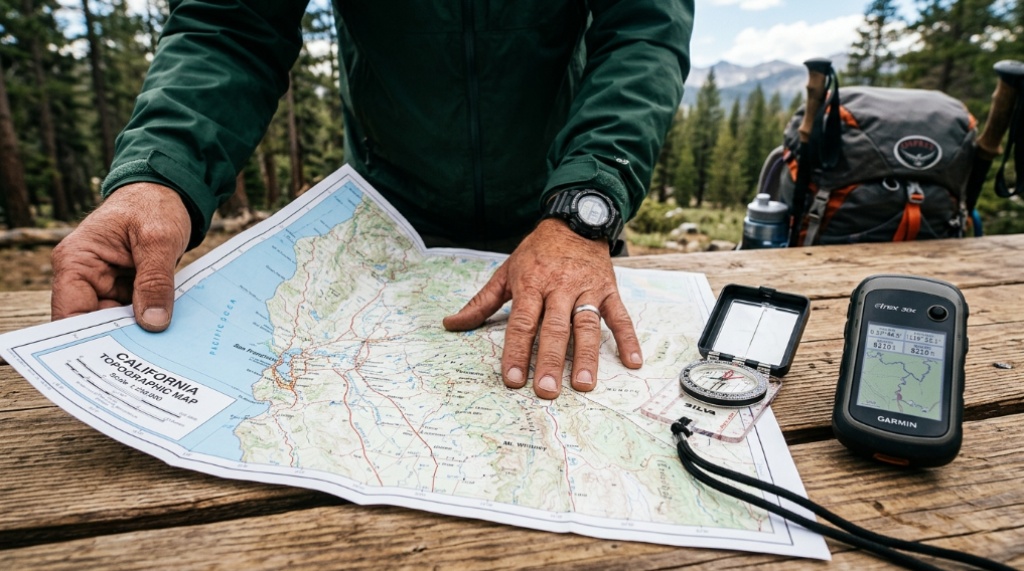
California’s backcountry changes constantly. Wildfires, winter storms, rockfalls, and trail maintenance projects can close routes or make them impassable. Before you leave, check the official website for the agency that manages your destination—whether that is the National Park Service, U.S. Forest Service, or California State Parks. Look for trail closure notices, fire restrictions, and recent visitor reports. Local hiking forums and social media groups can also provide current information, but treat unofficial reports with some skepticism.
Weather Forecasts
Mountain weather in California is notoriously fickle. A sunny forecast at the trailhead can turn into hail, lightning, or snow by midday. Check the forecast for the exact elevation you will be hiking at, not just the nearest town. The National Weather Service provides mountain-specific forecasts, and services like Mountain Forecast give detailed elevation breakdowns. Pay special attention to:
- Probability of thunderstorms, especially in the afternoon during summer
- Temperature range at your highest elevation
- Wind speed and direction
- Any weather advisories or warnings
If the forecast calls for severe weather, change your plans. The mountains will still be there next weekend.
Permits and Regulations
Many of California’s most beautiful backcountry areas require permits. The John Muir Trail, Mount Whitney, Desolation Wilderness, and numerous other destinations use quotas to limit visitor numbers. Some permits are available on a first-come, first-served basis, while others require a lottery system. Check the managing agency’s website well in advance—some popular permits open six months ahead and sell out within minutes. Also note that some areas require bear-proof food canisters, and fire restrictions may prohibit campfires entirely. Ignorance of these rules is not an excuse, and fines can be substantial.
Pack the Right Gear
Your gear can mean the difference between an uncomfortable night and a life-threatening situation. The Ten Essentials—a list originally compiled by The Mountaineers—remains the gold standard for backcountry preparedness. These items are not optional extras; they are the minimum you should carry on every hike, even day trips.
| Essential Category | Specific Items | Why It Matters |
|---|---|---|
| Navigation | Physical map, compass, GPS device or app | Prevents getting lost, which is the most common backcountry emergency |
| Sun protection | Sunscreen, sunglasses, wide-brim hat | California sun is intense at elevation; sunburn can ruin a trip and increase dehydration risk |
| Insulation | Extra layers, including a warm jacket and rain shell | Temperatures can drop 30+ degrees in the mountains after sunset |
| Illumination | Headlamp or flashlight with spare batteries | Hiking out in the dark without light is dangerous and slow |
| First aid | Bandages, antiseptic, blister treatment, pain relievers | Treating minor injuries on the trail prevents them from becoming major problems |
| Fire | Waterproof matches or lighter, fire starter | Needed for emergency warmth and signaling |
| Repair kit | Duct tape, multi-tool, gear repair items | Fixing broken straps, packs, or tents on the trail |
| Nutrition | Extra food beyond what you expect to eat | Provides energy for unexpected delays or emergencies |
| Hydration | Water bottles or bladder, water filter or purification tablets | Prevents dehydration; natural water sources require treatment |
| Emergency shelter | Emergency bivy sack, space blanket, or lightweight tarp | Protects you if you are forced to stay overnight unexpectedly |
Beyond the Ten Essentials, pay special attention to your footwear. Trail runners work well for light day hikes, but heavier boots provide better ankle support on rocky, uneven terrain. Break in new footwear before a long trip to avoid blisters. And always carry a backpack that fits properly—a poorly adjusted pack can cause shoulder pain and back strain that makes the hike miserable. Before heading out on the trail, make sure you know how to apply anti-chafe balm for hiking to prevent friction injuries and stay comfortable throughout your trek.
Water: The Most Critical Resource
Dehydration is one of the most common reasons hikers end up needing rescue in California’s backcountry. The dry air, intense sun, and physical exertion all increase your fluid needs. A general rule is to carry at least one liter of water for every two hours of hiking, but this varies based on temperature, elevation, and your individual sweat rate.
For day hikes, carry enough water to cover your entire trip, plus a safety margin. For overnight trips, you will need to refill from natural sources. Never drink untreated water from streams or lakes—even in remote areas, giardia and other pathogens are present. A lightweight water filter or purification tablets solve this problem. Look for filters that remove both protozoa and bacteria, and carry a backup purification method in case your primary filter fails.
In desert areas like Joshua Tree or Death Valley, water sources are rare or nonexistent. You must carry every drop you will need. In the Sierra, streams are plentiful in early summer but many dry up by late August. Check current conditions and plan your water sources accordingly.
Plan for Emergencies
Even with careful planning, things can go wrong. A twisted ankle, sudden weather change, or navigational error can turn a routine hike into an emergency. Your preparation determines how well you handle these situations.
Share Your Itinerary
Before you leave, tell someone you trust exactly where you are going, what route you plan to take, and when you expect to return. Provide them with your planned camping locations if you are on an overnight trip. Agree on a check-in time, and instruct them to contact search and rescue if you do not check in by that time. This simple step dramatically speeds up rescue efforts if something goes wrong.
Know How to Call for Help
Cell phone coverage is unreliable in most of California’s backcountry, but not impossible. Before you lose signal, send your itinerary and expected return time to someone. Carry a fully charged power bank so you can recharge your phone if you do find signal. For trips into truly remote areas, consider renting or purchasing a personal locator beacon (PLB) or satellite messenger device. These devices allow you to send an SOS signal via satellite, even where there is no cell coverage. They have saved countless lives and are worth the investment for regular backcountry users.
Know Your Turn-Around Time
Set a specific time—not a distance or destination—at which you will turn around and head back, regardless of how close you are to your goal. This prevents the common mistake of pushing forward to reach a summit or campsite and then running out of daylight or energy on the return trip. A good rule of thumb is to turn around no later than 2:00 PM in the summer, or earlier if you started late or the weather looks threatening.
Frequently Asked Questions
What is the best time of year for backcountry hiking in California?
It depends on the region. The Sierra Nevada is generally best from July through September, after snow melts but before autumn storms arrive. Coastal trails in places like Big Sur are hikeable year-round, though summer can be foggy. Desert areas like Joshua Tree and Death Valley are best in late fall through early spring—summer heat is dangerously intense.
Do I need bear spray in California’s backcountry?
Bear spray is not commonly carried in California, and it is not permitted in some national parks. Instead, focus on proper food storage: use bear-proof canisters where required, hang food where allowed, and never keep food in your tent. Black bears in California are generally not aggressive, but they are persistent in seeking food.
Can I hike alone in California’s backcountry?
Yes, solo hiking is legal and many people do it. However, it carries additional risk. If you hike alone, be extra conservative with your route choices, tell someone your exact plan, and consider carrying a satellite messenger device. Solo hikers should also be aware that a minor injury can become a serious emergency without anyone to help.
How do I get a permit for Mount Whitney or the John Muir Trail?
Both require permits through Recreation.gov. Mount Whitney uses a lottery system, while John Muir Trail permits are also quota-based. Applications typically open months in advance, and demand far exceeds availability. Apply early and have backup dates or alternative routes in mind.
What should I do if I encounter a mountain lion?
Do not run. Stand your ground, make yourself look larger by raising your arms or opening your jacket, and speak firmly. Slowly back away while facing the animal. If attacked, fight back aggressively with rocks, sticks, or your trekking poles. Mountain lion attacks are extremely rare, but knowing how to respond can save your life.
Is it safe to drink water from streams in the Sierra Nevada?
No. Even clear, fast-moving mountain streams can contain giardia, cryptosporidium, and other pathogens from animal waste. Always treat water with a filter, purification tablets, or by boiling. Skipping treatment to save time or weight is one of the most common—and preventable—causes of illness on the trail.
Conclusion
Planning a safe hiking trip in California’s backcountry comes down to preparation, honesty about your abilities, and respect for the environment. Choose a route that fits your experience level, check current conditions and weather, secure permits in advance, and pack the essentials—especially water, navigation tools, and emergency communication. Share your itinerary with someone reliable, set a turn-around time, and stick to it. The backcountry will reward you with some of the most stunning landscapes in the world, but only if you return safely to enjoy them again. Start small, build your skills, and let every trip teach you something new.

