

You are standing at the top of a cliff, heart pounding, harness clipped, and your entire life depends on a single piece of equipment: the rope. It is not just a cord; it is your lifeline. Yet, many adventurers make the mistake of choosing a rope based on price tags or brand labels rather than critical safety factors. The search for a safe rappelling rope is more than a shopping task—it is a discipline of risk management, material science, and personal preparedness. This guide does not just list features; it teaches you exactly how to evaluate, test, and select a rope that will bring you down safely every single time.
What Makes a Rappelling Rope Safe Versus Unsafe?
Defining Safety in Technical Terms
A safe rappelling rope is one that can absorb impact energy, resist abrasion, and remain stable under load without unexpected elongation. Safety is not a feeling; it is a measurement. Ropes are rated by impact force, number of falls held, and sheath slippage. An unsafe rope might look new but fail due to hidden core damage, incorrect diameter for your device, or poor UIAA certification.
Hidden Dangers in Low-Quality Ropes
Low-quality ropes often have inconsistent diameters, weak sheath-to-core bonds, and substandard dynamic elongation. When you rappel, heat from friction can melt a cheap sheath, exposing the core. This leads to sudden breakage. Real-world tests show that ropes without UIAA certification can fail after as few as three heavy rappels. Always verify certification labels before purchase.
The Role of Rope Construction
Two main construction types exist: kernmantle (core and sheath) and solid braid. For rappelling, kernmantle is the gold standard. The core handles load, while the sheath resists wear. A safe rope must have a tightly woven sheath that slides minimally over the core. If you can pinch the sheath and move it easily, the rope is dangerous.
Which Rope Diameter Is Safest for Rappelling?
Why 9.5mm to 10.5mm Is the Sweet Spot
For general rappelling, a rope between 9.5mm and 10.5mm offers the best balance of control, durability, and friction. Thinner ropes (8mm or less) are lighter but can slip through many rappel devices, especially under muddy or icy conditions. Thicker ropes (11mm+) are ultra-durable but heavy and difficult to manage on long descents. Stick to this range unless you have a specific technical reason.
Friction and Heat Management
Thinner ropes generate less friction, which can cause you to descend too fast and overheat the device. This heat degrades the rope sheath. A safe rappelling rope creates enough drag to allow controlled descent without excessive force. Test your rope with your specific device before trusting it on a real route.
Real-World Example: Canyoneering vs. Climbing Rappels
In canyoneering, ropes frequently get wet and muddy. A 9.5mm rope may become slippery and hard to control. Many experienced canyoneers choose 10.5mm ropes for added grip. In dry climbing environments, 9.5mm to 9.8mm ropes are common and safe. Match diameter to environment, not just preference.
How Do Static and Dynamic Ropes Differ in Rappelling?
Dynamic Rope Explained
Dynamic ropes are designed to stretch under load, absorbing the shock of a fall. For rappelling, they offer a softer descent and are preferred for climbing and mountaineering because they reduce impact on anchors. If you are moving on vertical terrain where falling is possible, dynamic rope is the safest choice.
Static Rope Explained
Static ropes have very low stretch (less than 5%). They are ideal for industrial work, rescue operations, and simple rappels where the rope is fixed and you descend without risk of falling from above. However, static ropes transmit more force to anchors and can be jarring to the body. Never use a static rope for lead climbing or any scenario involving a potential fall.
Which One Should You Choose?
If you are a recreational climber, hiker, or mountaineer, always select a dynamic rope. If you are a professional rescuer or do high-angle industrial work, a static rope may be appropriate. Never mix the two types in the same system. A safe rappelling rope is one that matches the specific physics of your activity.
What Certifications Should a Safe Rappelling Rope Have?
UIAA and EN Standards
The UIAA (International Climbing and Mountaineering Federation) sets the global benchmark for climbing rope safety. A UIAA-certified rope must survive at least 5 UIAA falls while maintaining low impact force. EN 892 is the European equivalent. Without these certifications, a rope’s safety claims are unverified. Always check for the UIAA label on the rope packaging or tag.
ASTM Requirements
For ropes used in the United States, ASTM F2116-02 provides standards for low-stretch and static ropes. While not required for all recreational ropes, ASTM compliance adds a layer of verification. If your rope lacks both UIAA and ASTM marks, treat it as untested.
How to Verify Certifications
Look for printed tags or stamps on the rope itself. Many reputable brands include a small woven label near the end. If buying online, check the manufacturer’s website for certification data. Avoid any brand that does not clearly display its testing standards. Your safe rappelling rope must come with verifiable safety documentation.
How Should You Inspect a Rappelling Rope Before Every Use?
Visual Inspection Steps
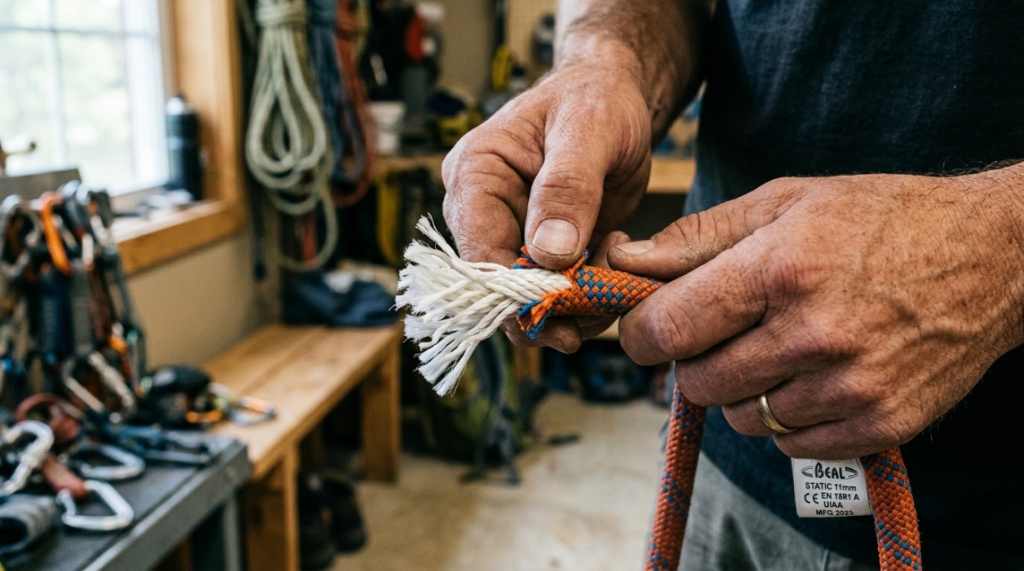
Run the rope through your hands from end to end. Look for flat spots, frayed fibers, discoloration, or soft sections. Sheath damage indicates internal core issues. If you see any white core fibers poking through the sheath, the rope is compromised and must be retired immediately. Perform this check before and after every rappel.
Feel Test for Core Damage
Bend the rope into a tight U-shape. A healthy rope feels round and firm. If you feel a flat or squishy spot, the core may have separated. This is a sign of hidden damage from a previous fall or abrasion. Never use a rope with suspicious soft spots.
When to Retire a Rope Immediately
Retire your rope if it has been subjected to a severe fall (fall factor >1), if it has chemical exposure (battery acid, gasoline), if it smells burnt, or if it is older than 5 years of regular use. Some manufacturers recommend retirement after 3 years. When in doubt, replace it. A retired rope is not a backup rope; it is garbage.
Can You Use the Same Rope for Climbing and Rappelling?
The Dual-Use Reality
Yes, you can use the same dynamic rope for both climbing and rappelling, but you must inspect it much more frequently. Rappelling puts heavy wear on the rope sheath due to friction from the device. Climbing puts stress on the core due to falls. Using one rope for both doubles the wear rate. Many climbers maintain a dedicated rappelling rope to extend the life of their primary climbing rope.
Pros and Cons of Combined Use
| Pros | Cons |
|---|---|
| Saves money on equipment | Wear accumulates twice as fast |
| Simplifies gear management | Early retirement required |
| One rope for all vertical work | Hidden damage harder to track |
If you decide to use one rope, keep a log of every fall, every rappel, and every abrasion incident. Most recreational climbers find that owning two ropes is safer and more economical in the long run.
Recommendation for Beginners
Beginners should buy a dedicated rappelling rope around 60 meters long and 9.8mm to 10.2mm diameter. This allows you to learn proper inspection and handling without risking your climbing rope. As you gain experience, you can decide whether to combine functions.
How Does Rope Length Impact Safety During Rappel?
Why Length Matters More Than You Think
Rappel length must exceed the distance to your next anchor or the ground. If your rope is too short, you could run out of rope while still on the wall, forcing a dangerous re-rig. A safe rule: your rope must be at least twice the length of the longest pitch you plan to descend.
Standard Lengths and Their Uses
- 30m (100ft): Suitable for single-pitch sport climbs and short rappels.
- 50m (165ft): Good for most multi-pitch climbs and canyon descents.
- 60m (200ft): The most versatile length for general climbing and rappelling.
- 70m+ (230ft+): Needed for long alpine routes and big wall descents.
Always bring an extra 5 to 10 meters for knot tying and anchor adjustments. A rope that is exactly pitch length is dangerously tight.
Doubling the Rope for Longer Rappels
If you need to rappel longer than your rope, you can double the rope by threading it through the anchor and rappelling on both strands. This effectively doubles your usable length but halves your rope diameter exposure. Ensure your rappel device can handle doubled rope thickness.
What Is the Best Way to Store a Rappelling Rope?
Proper Coiling Technique
Always coil your rope loosely using a butterfly coil or over-under method. Never stuff a wet rope into a bag for long periods. Wet ropes stored improperly develop mildew that weakens fibers. Dry your rope in the shade, away from direct sunlight and heat sources. UV rays degrade nylon and polyester sheaths over time.
Temperature and Chemical Considerations
Store ropes in a cool, dry place between 50°F and 80°F. Avoid garages where gasoline, oil, battery acid, or pesticides may be present. Chemical contamination can cause sudden failure even if the rope looks pristine. Use a dedicated rope bag or a clean cotton sack.
Lifespan Expectations
With proper care, a dynamic rappelling rope lasts 2 to 5 years depending on frequency of use. A static rope may last longer but should still be retired after 5 years. Write the purchase date on the rope end with a permanent marker. This simple habit prevents confusion about age.
How Do You Properly Rig a Safe Rappel System?
Anchor Setup Fundamentals
Your rappel is only as safe as your anchor. Use two or three independent anchor points with load-sharing if possible. Carabiners should be rated, locking, and oriented correctly. Never rappel from a single bolt or tree without verifying its integrity. A safe rope cannot compensate for a weak anchor.
Device Compatibility Check
Not all devices work well with all rope diameters. Tube-style devices (ATC, Reverso) work best with 8.5mm to 11mm ropes. Assisted-braking devices (Grigri, MegaJul) have specific diameter ranges. Always test the device with your rope before entering the field. A mismatch can cause loss of control.
Knot Safety
Always tie a stopper knot (overhand or figure-eight) at the end of the rope before rappelling. This prevents accidentally rappelling off the end. Many accidents occur because climbers forget this simple step. Make it a non-negotiable habit.
Frequently Asked Questions
Can I use a static rope for rappelling?
Yes, but only in controlled environments where falling is not possible. Static ropes transmit more force to anchors and offer no stretch to absorb dynamic loads. For most recreational rappelling, a dynamic rope is safer.
How often should I replace my rappelling rope?
Replace your rope every 2 to 5 years depending on use. Retire it immediately after a severe fall, if visible damage appears, or if it has chemical exposure. Write the purchase date on the rope to track age accurately.
Is a 9mm rope safe for rappelling?
9mm ropes are safe for rappelling if used with compatible devices. They are lighter but have less friction. Use a tube-style device or an assisted-braking device rated for thin ropes. Practice controlled descents before relying on them in serious terrain.
What is the difference between a climbing rope and a rappelling rope?
There is no technical difference—both are dynamic kernmantle ropes. The distinction is practical: a dedicated rappelling rope protects your climbing rope from extra wear. Many climbers own separate ropes for each purpose.
Can I wash my rappelling rope?
Yes, wash it in cold water with a mild rope-specific soap. Avoid bleach, fabric softener, and hot water. Dry it in the shade. Washing removes dirt and grit that cause internal abrasion. Clean ropes last longer and perform better.
How do I know if my rope has core damage?
Feel the rope for flat, soft, or squishy sections. Bend it into a tight U-shape and inspect for lumps or depressions. If the sheath moves easily over the core, the rope is compromised. Core damage often shows no outward signs until failure occurs.
Is it safe to rappel on a wet rope?
Wet ropes lose some friction and become heavier. Nylon ropes lose up to 20% of their strength when wet. Dry ropes before use when possible, and be extra cautious on wet rappels. Reduce descent speed to compensate for reduced braking control.


