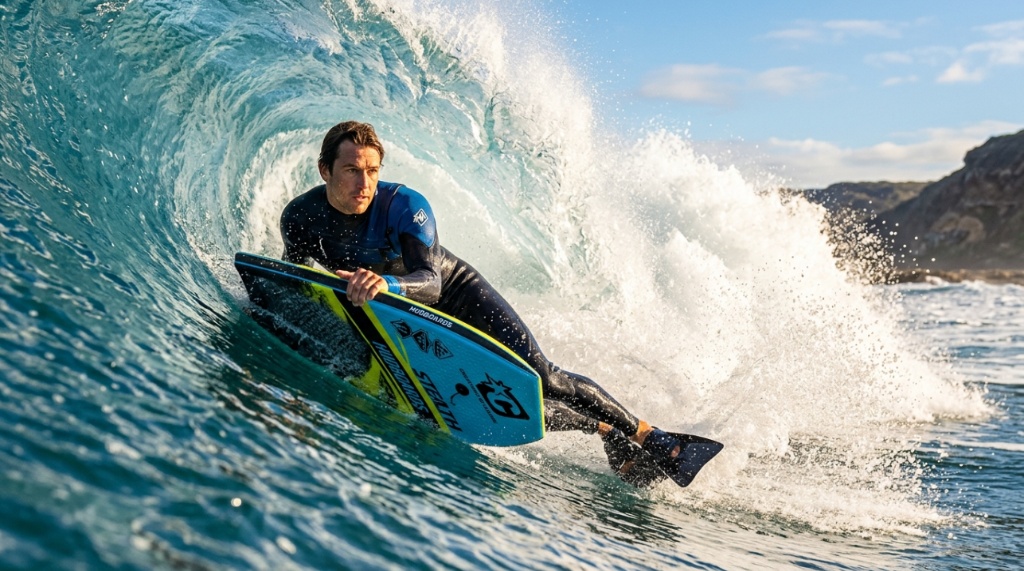
You’ve watched the pros glide across waves, but every time you hit the water on a cheap foam board, you sink, spin out, or get tossed. The frustration is real. You need a board that helps you actually improve without emptying your wallet. That’s where affordable surf training bodyboards lightweight bodyboards come in. These boards bridge the gap between pool toys and performance equipment, letting you practice paddling, wave timing, and maneuvering without the high price tag of a competition board. In this guide, I’ll show you exactly what to look for so you stop wasting money on junk and start making real progress in the ocean.
What Makes a Bodyboard Suitable for Ocean Training?
A suitable ocean training bodyboard is stiff enough to hold a line, buoyant enough to paddle effectively, and durable enough to handle repeated impact with waves and sand. Unlike toy boards, which are soft and rockered like a banana, training boards have a flat bottom contour and a slick bottom that allows for planing speed.
Core Construction: PE vs. PP vs. EVA
Polyethylene (PE) is the standard for training boards. It offers a good balance of stiffness, flexibility, and price. Polypropylene (PP) is lighter and faster but more expensive and brittle. EVA foam (what toys are made of) is too soft and waterlogged for serious practice. For training, stick with high-density PE.
Slick Bottom Materials
The bottom should be a slick plastic (HDPE) that glides over water. Avoid boards with a rough or textured bottom—they create drag and slow you down. A good slick bottom helps you catch waves earlier and requires less effort to paddle.
Nose Shape and Width
A crescent tail provides better control for turns, while a bat tail offers more stability. For beginners practicing prone positioning, a wider nose (around 21–22 inches) gives more flotation. Narrower noses (18–19 inches) are for advanced riders focused on speed and maneuverability.
Why Lightweight Bodyboards Matter for Endurance Practice
Lightweight bodyboards reduce fatigue during long sessions. When you’re paddling out repeatedly, an extra ounce of weight feels like a pound after 30 minutes. Lighter boards also respond faster to your body movements, making it easier to practice tight turns and quick adjustments.
How Weight Affects Your Paddling Economy
Every pound matters. A standard training board weighs 2.5–3.5 pounds. Cutting even half a pound reduces the energy you expend to push the board through water and lift it over waves. For ocean practice, where you’re constantly fighting chop and currents, this efficiency compounds over an hour-long session.
Reduced Arm Strain for Novice Paddlers
If your arms fatigue quickly, a lightweight board is a game-changer. You can focus on proper paddling form—long strokes from the hips—instead of fighting against board weight. This builds better muscle memory for wave catching.
Portability and Transportation
Lightweight boards are easier to carry from your car to the beach. This seems trivial, but when you’re already carrying fins, a wetsuit, and a bag, a 2-pound board vs. a 4-pound board makes a real difference in your desire to get in the water.
Which Materials Offer the Best Durability Without Adding Weight?
High-density PE foam with a cross-linked structure offers the best durability-to-weight ratio. Core density (measured in grams per liter) is the key indicator. Aim for 1.5–2.0 lb/ft³ density. This provides enough rigidity to resist creasing and denting while staying light.
Stringer Systems: Carbon vs. Wood vs. None
Carbon stringers add stiffness without much weight. A single carbon rod down the center prevents the board from folding during turns. Wood stringers are heavier but provide a unique flex pattern. For training, a single carbon stringer is ideal. Avoid stringerless boards—they will permanently warp after a few sessions.
Rail Beveling and Edge Durability
Look for boards with hard, sharp rails. Soft, rounded rails (common on cheap boards) break down quickly. A well-beveled rail holds its shape and allows you to dig an edge into the wave face for turning. Run your finger along the rail—if it feels soft or has visible air bubbles, pass on that board.
Mesh and Lamination Quality
Some budget boards have a mesh layer between the foam and slick. This prevents the slick from peeling. Check the edges for delamination. A board that starts peeling after 5 sessions is not durable, no matter the price. Look for boards with heat-laminated layers, not glue.
How to Match Board Size to Your Body Weight for Training
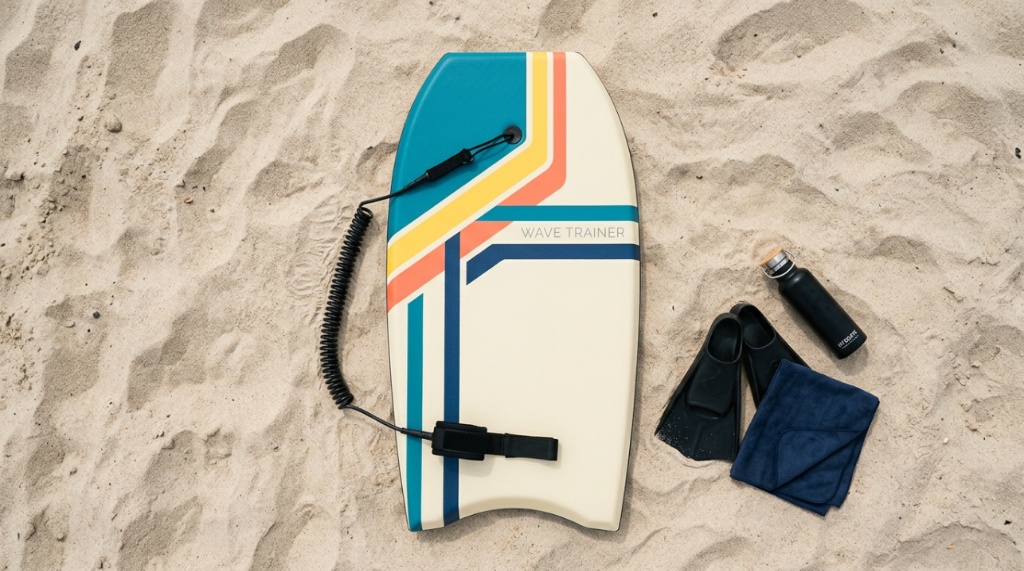
Match your bodyboard volume to your weight using a simple ratio: your weight in pounds divided by 2.2 gives you the board length in inches. A 165-pound paddler needs a 41-inch board. Too much volume and you’ll be unstable; too little and you’ll sink.
Length and Width Guidelines
| Weight Range (lbs) | Board Length | Width Range |
|---|---|---|
| 100–130 | 39–40 inches | 20–21 inches |
| 130–170 | 41–42 inches | 21–22 inches |
| 170–200 | 43–44 inches | 21.5–22.5 inches |
| 200+ | 45–46 inches | 22.5–23 inches |
Thickness Matters for Flotation
Training boards should be at least 2.25 inches thick. Thinner boards sacrifice buoyancy, forcing you to paddle harder to stay afloat. Thicker boards (2.5–2.75 inches) are buoyant but can feel bulky. For ocean practice with waves, 2.25–2.5 inches is the sweet spot.
Why Beginners Should Size Up, Not Down
New paddlers often choose a board that looks right but is actually too small. A slightly oversize board (1 inch longer than the formula suggests) provides extra stability. You can always adjust to a smaller board as your skills improve. This prevents early frustration.
Can You Find a Quality Training Bodyboard Under $100?
Yes, but only if you know where to look and what to sacrifice. Under $100, you’re not getting carbon stringers or high-end PP cores. However, you can find excellent PE boards from brands that focus on value. The key is avoiding big-box store toys and seeking out specialized surf gear retailers.
While finding the right board is crucial for mastering your ocean practice, staying warm between sessions is just as important. Don’t forget to pack the Best Affordable Surf Poncho for Beach Days so you can change comfortably on the shore and block the cold wind after a long session in the surf.
What $100 Gets You in 2025
Expect a PE core with a single stringer (possibly plastic, not carbon), an HDPE slick bottom, and a basic crescent tail. The shape will be a standard rounded nose. You won’t get fancy channels or contoured decks. But you will get a functional board that planes, turns, and lasts for 6–12 months of regular use.
Red Flags in Budget Boards
- EVA or “memory foam” core material
- No stringer (check by tapping the bottom—a solid sound = stringer, hollow = none)
- PVC slick bottoms (they crack and peel)
- “One size fits most” claims (real bodyboards are weight-specific)
Where to Find Deals
Check dedicated surf outlets and online specialty shops that carry last season’s models. Brands like Morey, BZ, and Custom X often have budget lines with solid construction, just fewer bells and whistles. Avoid Amazon’s cheap no-name boards unless you can verify the materials.
What Features Prioritize for Improving Wave Catching Skills?
Prioritize board stiffness over weight. A stiff board transfers your paddling energy directly into forward motion, helping you catch waves earlier. A floppy board absorbs your stroke energy. Look for a board that feels rigid when you try to twist it with your hands.
Bottom Channels and Hydrodynamics
Single-channel bottoms help with stability and tracking straight. Double channels offer more speed and control during turns. For wave-catching practice, a single channel is easier to manage initially. Avoid boards with no channels at all—they slip sideways when you paddle.
Deck Contouring for Grip and Control
A contoured deck (with raised bumps or ridges) keeps your body in position without slippage. This is critical during takeoff. Flat decks require more core tension to stay centered. Look for “3D” or “contoured” deck descriptions. This allows you to focus on timing rather than holding on.
Tail Shape for Wave Entry
A crescent tail helps you sink the tail to drop into waves. A bat tail provides more surface area for stability but makes drop-in timing slightly trickier. For pure wave-catching practice, a crescent tail is the most forgiving and teaches proper weight shifting.
How to Test a Board’s Performance Before Buying
If you can visit a shop, do the “twist test.” Hold the board by the nose and tail and twist in opposite directions. The less flex, the stiffer the board. Next, squeeze the rails. Good foam should feel firm but not hard. Soft spots mean the board is under-dense and will waterlog quickly.
The “Sink Test” in a Pool or Calm Water
Place the board flat on calm water. Place your chest on the deck as if paddling. It should support your torso without the nose dipping underwater. If the nose plows under when you apply chest pressure, the board is too small or too thin for your weight.
Reading Reviews for Performance Clues
Look for reviews that mention “wave catching ability” and “how long it takes to paddle out.” Avoid reviews that only talk about color or price. Real users will describe whether the board planes quickly or slides out on steeper waves.
Specialized retailers often list exact weights, core materials, and stringer types. You can sort by price and weight to quickly identify options that fit both criteria. Look for boards explicitly labeled “ocean training” or “surf practice.” These designations often mean the board has been designed for the demands of real waves, not just pool play. Checking Online Inventory for affordable surf training bodyboards lightweight bodyboards
What Accessories Are Essential for Ocean Practice Sessions?
You need fins designed for bodyboarding, not just any swim fins. Bodyboarding fins have drainage channels and a specific blade angle to help you generate speed without cramping. A good leash is also critical—losing your board in a wave drains energy and ruins your session.
Fin Selection for Training
Padded foot pockets reduce blisters. Blades that are stiff but not rigid (around 70–80 durometer) provide a good balance of power and comfort. Avoid huge, floppy fins used for scuba diving—they create drag and will tire you out.
Leash and Wristcoil Considerations
A coiled leash keeps the board close without dragging. Velcro straps wear out over time, so check the attachment point. A quick-release velcro strap allows you to ditch the board in dangerous situations (like a big set wave). For training, a 6–8-foot coiled leash is standard.
Wax or Deck Grip?
Cheap boards have no grip. You need either bodyboarding wax (sticky, applied directly) or a grip pad. Wax is cheaper and works well if you apply it correctly (in small circles). Grip pads last longer but add slight weight. For training, wax is fine and forces you to learn proper hip positioning.
How to Maintain Your Budget Board for Longevity
Rinse your board with fresh water after every session. Salt crystals act like sandpaper, wearing down the slick and foam over time. Store it out of direct sunlight: UV rays break down the foam structure, making the board softer and less responsive.
Repairing Common Damage
Small dings can be fixed with inexpensive PVC paste or marine epoxy. Clean the area, fill the dent, and let it cure for 24 hours. Do not use hot glue—it melts the foam. A properly repaired board will last twice as long as a neglected one.
When to Retire a Training Board
When the board feels soft and flexes easily in your hands, it’s time to replace it. Training boards are consumables. Expect 6–12 months of heavy use. A board that has lost its stiffness is no longer helping you—it’s actually hindering your progress.
Frequently Asked Questions
What is the best bodyboard for a complete beginner?
A 42-inch PE board with a single carbon stringer, crescent tail, and contoured deck. Start with a board that’s 1–2 inches longer than the formula suggests for your weight. This gives you maximum stability while you learn wave timing.
How often should I replace my training bodyboard?
Replace your board every 6–12 months if you practice 2–3 times per week. Signs of needing a new board include permanent warping, soft spots in the foam, and a slick bottom that has lost its shine. A degraded board will not plane properly.
Can I use a children’s bodyboard for adult ocean practice?
No. Children’s boards lack the stiffness, density, and buoyancy required to support an adult body in ocean waves. They will buckle under chest pressure and won’t generate enough speed to catch waves. Always choose a board rated for your weight range.
Is a more expensive board always better for training?
No. Expensive PP boards are designed for competition and advanced maneuvers. For training, a mid-range PE board with good stiffness and proper sizing will serve you better than a high-end board that you can’t control. Focus on fit before price.
Do I really need a stringer in my board?
Yes. A stringer (carbon, wood, or plastic) prevents the board from collapsing and gives you consistent flex. Stringerless boards are cheap toys, not training equipment. Always look for at least one stringer. Two stringers are even better for stiffness.
What fins work best for bodyboarding practice?
Bodyboarding-specific fins with a drainage channel and a 70–80 durometer blade. Soft fins (like snorkeling fins) do not provide enough propulsion for wave catching. Hard fins (like drop-knee fins) can cause cramps during long prone sessions.
How do I store my bodyboard to prevent warping?
Store it flat, not leaning against a wall, in a cool, dry place away from direct sunlight. Do not leave it in a hot car. Heat causes the foam to expand unevenly, leading to permanent warping. A board bag adds extra protection.